
LATEST BLOG POSTS
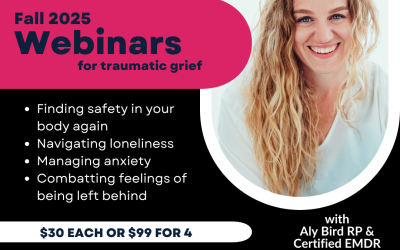
2025 Fall Webinar Series: Four Ways to Find Steadier Ground in Grief
4-part webinar series for young adults navigating traumatic grief. Learn tools to feel safer, less alone, and more in control after loss.

Sudden Loss & Young Adulthood: A Virtual Trauma-Informed Grief Therapy Group
A six-week virtual therapy group for young adults grieving a sudden or traumatic death. Led by a trauma and grief therapist. Receipts for registered psychotherapy available.

“I Should Be Able to Handle This on My Own”: Internal Objections to Grief Therapy
You may wonder, “What’s the point of grief therapy if it can’t bring them back?” Here’s what therapy can actually offer—and why it’s more than just talking.

Grief, Hypervigilance, and the Fear of Something Else Going Wrong
After someone dies, it’s not unusual to feel like you’re always waiting for the next bad thing to happen. This blog post explores how grief and hypervigilance are deeply connected, especially after sudden or traumatic loss. Learn why your nervous system stays on high alert, how fear and catastrophic thinking show up in the body, and what gentle, nervous-system-informed practices can help. If you’re grieving in a world that feels unsafe, you’re not broken—and you don’t have to navigate it alone.
“Therapy Won’t Change What Happened”: Misconceptions That Keep People Away
You may wonder, “What’s the point of grief therapy if it can’t bring them back?” Here’s what therapy can actually offer—and why it’s more than just talking.

Anticipatory Grief: When You’re Losing Someone Slowly
Grief doesn’t only begin after a death. Sometimes, it begins the moment you realize someone you love is dying.
It’s the quiet ache that rises during a hospital visit. The tears that come after a moment of clarity, then confusion. The way your body flinches when the phone rings. The constant, heavy knowing that life is changing—and there’s no stopping it.
This is called anticipatory grief, and it’s real. It’s valid. And it deserves care.

“People Like Me Don’t Go to Therapy”: Why Grief Support Isn’t One-Size-Fits-All
Feel like therapy isn’t for people like you? Let’s talk about where that belief comes from—and why it might be holding you back from the grief support you deserve.

How to Feel Safe in a Body That Feels Unsafe After Loss
Grief doesn’t just live in the mind—it lives in the body. After a death, especially a sudden or traumatic one, your nervous system may feel overwhelmed. You might feel numb, anxious, or disconnected from your physical self. This post offers somatic tools and gentle practices to help you reconnect with your body, regulate your nervous system, and rebuild a felt sense of safety—one small moment at a time. Learn how grief therapy can support you in healing both your heart and body.

“I Can’t Afford Therapy” or “I Don’t Have Time for Therapy”: Facing the Real-Life Barriers to Getting Grief Support
Do you think you can’t afford grief therapy? Or it won’t fit into your busy schedule? Here’s why support might be more doable than you think—and where to start if it still isn’t.

A Simple Grief Ritual You Can Do at Home | Honoring Any Kind of Loss
Learn a simple step-by-step grief ritual you can do at home to honor any kind of loss — including secondary losses. Ideal for anyone carrying grief, newly or years later.

What If I’m Already Grieving and They Haven’t Died Yet?
It can feel strange to talk about grief when your person is still alive. You might wonder: Is it too soon to feel this way? Am I abandoning them emotionally? Am I doing this wrong?
You’re not.
You’re grieving what’s already changing. And it’s okay to name that.

When Grief Feels Like Anxiety: Understanding the Overlap
Grief is more than just an emotion—it’s a full-body experience. When someone we love dies, the impact is felt not only in our hearts but in our nervous system, brain, and even our immune response. Understanding the science behind grief can help normalize what you’re going through and offer a sense of compassion for your body’s reaction.

Quick and Easy Self-Care Tips for Grief: How to Take Care of Yourself When You’re Grieving
Grief can feel overwhelming. When you’re grieving, even basic tasks can seem impossible. That’s why simple, gentle self-care is essential. It won’t “fix” the pain, but it can help you get through the day, one small step at a time.
If you’re wondering how to take care of yourself while grieving, here are easy, practical self-care tips to support your body, mind, and heart.

What If I Never Want to Date Again? Exploring All Paths Forward
After the loss of a partner, society often assumes that dating again is the “next step.” But what if you don’t want to? What if you’re not sure?
Some people find deep joy in repartnering after loss. Others feel that their love story is complete. Some might consider dating but feel no urgency. And many, many others live in the in-between—not sure where they stand, but feeling pressure to decide.

The Science of Grief: How Your Brain and Body Process Loss
Grief is more than just an emotion—it’s a full-body experience. When someone we love dies, the impact is felt not only in our hearts but in our nervous system, brain, and even our immune response. Understanding the science behind grief can help normalize what you’re going through and offer a sense of compassion for your body’s reaction.

Dating After Loss: You Don’t Have to Have It All Figured Out
If you’ve lost a significant other, you may have encountered this question in one form or another: So… are you dating again?

Grieving Complicated Relationships: Making Sense of Grief When the Relationship Wasn’t Simple
Grief is often imagined as a wave of sorrow following the death of someone deeply loved and cherished. But for many, the story is more complicated. What happens when the person who died wasn’t someone you had a good relationship with? What if your connection was marked by distance, conflict, estrangement, or even abuse?
These are the kinds of losses that often go unspoken — and the grief they leave behind can feel isolating, confusing, and full of mixed emotions. If you’re navigating a loss that doesn’t fit neatly into conventional ideas of mourning, you’re not alone. And therapy might be a valuable place to begin making sense of your experience.

Why Grief Makes You Feel So Tired (And What to Do About It)
Grief is exhausting—and not just emotionally. It can leave you physically drained, mentally foggy, and wondering why getting through the day feels like a marathon.
This kind of deep fatigue is one of the most common (and confusing) parts of grief. You might be sleeping more than usual or finding it impossible to rest at all. You’re not lazy, and you’re not doing grief wrong. Your body is doing its best to carry the weight of what you’ve lost and are actively losing.

Grief & Why It Hurts So Much?
Grief is a natural, deeply painful response to loss. It’s an emotion that feels all-consuming, affecting our hearts, minds, bodies, and lives. Grief is the emotional reaction to the void left when something or someone we’re deeply connected to is no longer part of our world.
At its core, grief is a process of adapting to change, learning how to exist in a world that no longer includes what we once held dear. And yet, despite being a universal experience, grief is often misunderstood, minimized, or avoided. In our society, grief is frequently seen as something to “get over,” causing many to suppress their emotional pain rather than give it the space to it’s asking for.

When the Loss Hasn’t Happened Yet: Understanding Anticipatory Grief
After a loss, many people describe a lingering sense of dread. A deep, buzzing anxiety that something bad is about to happen—even though the worst has already occurred. You might find yourself constantly checking your phone. Worrying when someone is late. Struggling to sleep. Bracing yourself for more loss.
This is hypervigilance—a state where your nervous system is stuck on high alert. And while it can feel exhausting and even irrational, it’s a completely normal grief response.

Navigating the Nerves: Facing Dating Anxiety After Loss
If you’ve lost a significant other, you may have encountered this question in one form or another: So… are you dating again?

Grief, the Nervous System, and How to Feel Safe in Your Body Again
Grief isn’t just emotional—it’s physical. When we lose someone we love, our entire nervous system responds. You may feel exhausted, restless, numb, or constantly on edge. You might struggle to sleep, feel tightness in your chest, or experience a deep, lingering fog.

Am I Ready to Date Again After Loss? A Gentle Exploration
The question of when—or if—to date again after the death of a partner is deeply personal. There is no universal timeline, no milestone that tells you it’s time, and certainly no “right way” to go about it. Instead, there is only your own journey, shaped by your grief, your healing, and your evolving sense of self.

Dating After the Death of a Significant Other Workshop on May 21, 2025
To explore your thoughts, emotions, and hesitations around dating after loss, I’m hosting this workshop for the fourth time. There’s no pressure to take action—only support for whatever you’re feeling. Please join us.

Questions You Might Want to Ask in a Therapy Consultation
If you are new to therapy, it can daunting to find a therapist who feels like the right fit to you. Here are some questions that you might want to ask a therapist when meeting with them for a free consultation.